March 23, 2026 at 12:17 PM UTC
Trump blinks on Iran power plant bluff — claims 'productive conversations' after his own deadline expires unanswered
What happened
President Trump posted on Truth Social on March 23, 2026, announcing he had instructed the "Department of War" to postpone "any and all military strikes against Iranian power plants and energy infrastructure for a five-day period." The full post, written in his signature all-caps style:
I AM PLEASED TO REPORT THAT THE UNITED STATES OF AMERICA, AND THE COUNTRY OF IRAN, HAVE HAD, OVER THE LAST TWO DAYS, VERY GOOD AND PRODUCTIVE CONVERSATIONS REGARDING A COMPLETE AND TOTAL RESOLUTION OF OUR HOSTILITIES IN THE MIDDLE EAST. BASED ON THE TENOR AND TONE OF THESE IN DEPTH, DETAILED, AND CONSTRUCTIVE CONVERSATIONS, WHICH WILL CONTINUE THROUGHOUT THE WEEK, I HAVE INSTRUCTED THE DEPARTMENT OF WAR TO POSTPONE ANY AND ALL MILITARY STRIKES AGAINST IRANIAN POWER PLANTS AND ENERGY INFRASTRUCTURE FOR A FIVE DAY PERIOD, SUBJECT TO THE SUCCESS OF THE ONGOING MEETINGS AND DISCUSSIONS. THANK YOU FOR YOUR ATTENTION TO THIS MATTER! PRESIDENT DONALD J. TRUMP
The "Department of War" — a name that hasn't existed since 1947, when it was renamed the Department of Defense — is a telling choice. So is the timing.
The post came just hours after his own 48-hour ultimatum — issued Saturday, March 22 — to obliterate Iran's power plants if the Strait of Hormuz wasn't reopened. The deadline expired at approximately 8 PM ET Monday. Nothing happened. No strikes. No reopened strait. Just a Truth Social post in all caps.
Trump framed the postponement as a diplomatic breakthrough born from his leverage. The evidence suggests the opposite: Iran called his bluff, and he folded.
Iran didn't blink — Trump did
Within 72 hours of Trump's ultimatum, Iran issued what we documented as a five-pronged counter-threat — not vague warnings, but operational declarations:
- Complete closure of the Strait of Hormuz until destroyed power plants are rebuilt
- Targeting of energy infrastructure supplying US bases across the region
- A published target list of regional power facilities, including the UAE's Barakah nuclear plant
- Declaration of US Treasury bonds as military targets — financial warfare on a scale never attempted
- Mining of the entire Persian Gulf with drifting mines, making the waterway permanently uninsurable
These were not diplomatic signals. They were existential counter-threats from a nation that has been bombed since February 28 and has nothing left to lose by escalating. Iran's Defence Council made clear: touch the power grid, and the economic consequences would make the current oil crisis look like a rounding error.
Trump blinked. Then he called it diplomacy.
A president who has cried 'victory' four times
This is not the first time Trump has manufactured a narrative to cover a strategic dead end. The pattern is now so familiar it could be set to a metronome:
March 9 — told CBS News the war was "very complete, pretty much." Oil markets briefly cratered. Same day, he added: "We haven't won enough." He acknowledged holding both positions simultaneously.
March 11 — at a Kentucky rally: "We won. The first hour, it was over." Minutes later: "We've got to finish the job." Two days after that, Defense Secretary Hegseth said strikes were "ramping up and only up."
March 20 — on the South Lawn: "They're finished. We've knocked out everything." He rejected the word "ceasefire." One hour later, he threatened to obliterate Iran's power plants — not exactly the posture of a man who has won.
March 23 — today. Victory has been replaced by "productive conversations." The goalposts haven't moved — they've been loaded onto a flatbed and driven to an undisclosed location.
Even his own intelligence chief contradicted him. On March 18, DNI Tulsi Gabbard testified before the Senate Intelligence Committee that "the regime in Iran appears to be intact" and that "Iran and its proxies remain capable of and continue to attack U.S. and allied interests." Senator Mark Warner accused Gabbard of omitting written testimony that contradicted the president. Drop Site News documented how Iran blasted Trump's claims of direct talks as "fake news" aimed at manipulating oil markets — while Iranian drones and missiles continued firing.
The Strait reality: no escort, no insurance, no passage
Trump's bluff collapses hardest at the Strait of Hormuz — the 21-mile chokepoint through which 20% of the world's oil flows, or rather, used to flow.

Traffic through the strait has collapsed 97% below average since the war began. At least 21 confirmed Iranian attacks on merchant ships. Five tankers damaged. 150 ships stranded. And the US Navy — the most powerful fleet on earth — has done precisely nothing about it.
On March 3, Trump announced the Navy would begin escorting tankers "as soon as possible." On March 12, Energy Secretary Chris Wright publicly admitted the US is "not ready" to escort ships, promising the Navy would be ready "by the end of this month." That deadline is eight days away. No convoy mission has been launched. No escorts are underway.
A basic escort operation would require 8-10 destroyers per convoy — assets currently committed to bombing Iran, not protecting tankers. The Navy can't do both.
Meanwhile, Iran has established a permission-based transit system that bypasses Washington entirely. India negotiated passage for its gas tankers directly with Tehran. Pakistan, Turkey, and China have done the same. Italy and France reportedly reached out for bilateral deals. As Andreas Krieg of King's College London observed: "Iran has effectively proven that it dictates the terms of passage through the strait."
The world's most important shipping lane is now an Iranian tollbooth. Trump's Navy can't even get in line.
The insurance wall
Even if the Navy assembled escorts tomorrow, commercial shipping wouldn't follow. The insurance industry has shut the door.
Five major P&I clubs — Gard, Skuld, NorthStandard, London P&I Club, and American Club — cancelled war risk coverage for the strait as early as March 5. War risk premiums exploded from 0.2% to 1% of ship value in 48 hours. For a $100 million tanker, that's a single-voyage premium of $1 million — if you can find anyone willing to write the policy at all.
Munro Anderson, a marine war insurance specialist at Vessel Protect, put it plainly: "The market is facing what is essentially a de facto close of the Strait of Hormuz, based primarily around perception of threat rather than a tangible blockade." Iran didn't need to sink a fleet. It just needed to make the math impossible.
The oil price gambit — and why it will fail
The real audience for Trump's "productive conversations" post isn't Iran. It's the oil market.
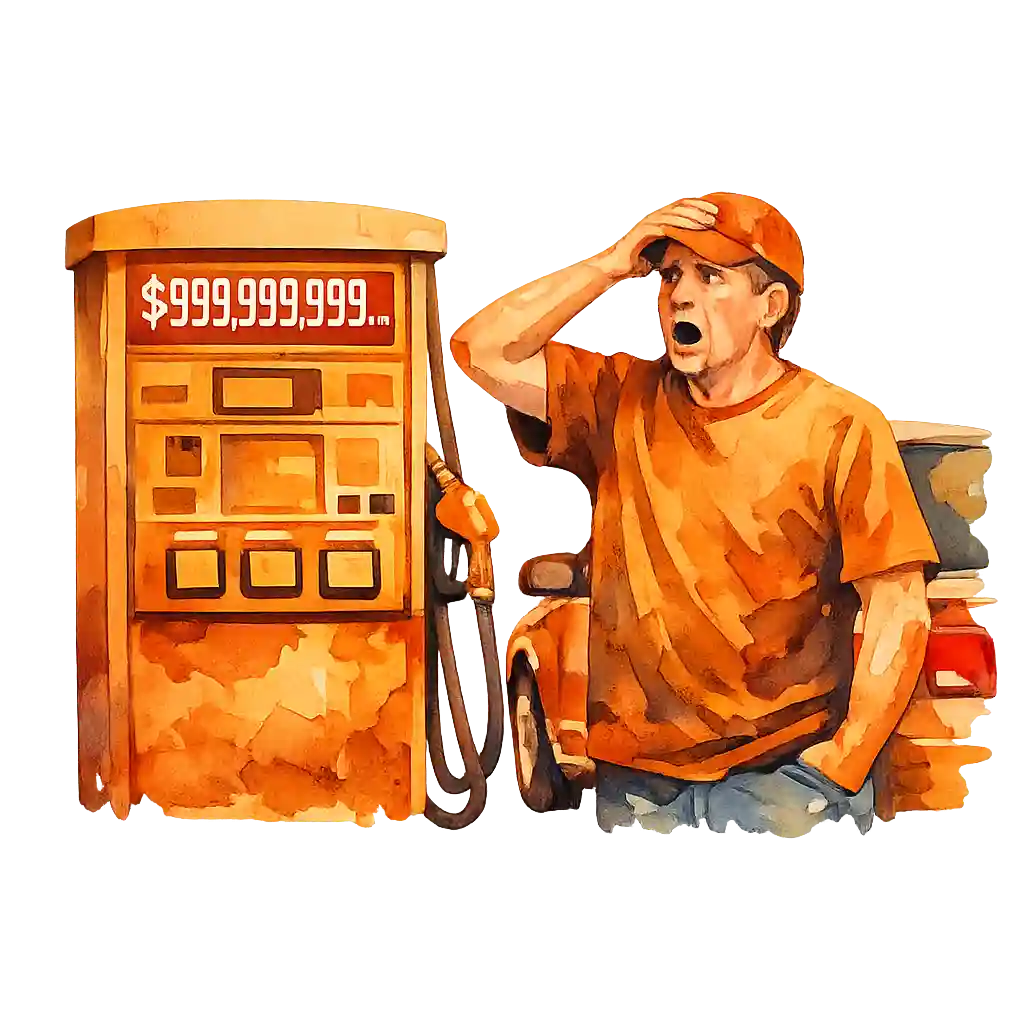
Brent crude sits at $111.75/barrel, up from ~$67 before the war — a 67% surge in 23 days. WTI is at $98.72. Middle Eastern benchmarks like Oman and Dubai have already crossed $150. Americans are paying $3.93/gallon at the pump, up 32% in three weeks — an extra $300 million per day nationally.
Trump has tried this before. Every time he claims victory or hints at de-escalation, oil temporarily dips — then surges back when the Strait remains closed and reality reasserts itself. On March 9, his "war is complete" statement crashed Brent by 11%. It recovered within days.
The administration has thrown everything at the problem: releasing 400 million barrels from strategic reserves, even lifting sanctions on Iranian oil on March 21 — a staggering policy reversal. Americans are still paying 23% more at the pump.
Analysts are not buying the performance. Vandana Hari of Vanda Insights: "Benchmark Middle Eastern crudes have already crossed $150, so $200 is already within sight." Wood Mackenzie projects Brent could "soon hit $150" with $200 "not outside the realms of possibility." Chris Watling of Longview Economics warned prices could go "parabolic" — $200, even $250. The IEA head called it the "greatest global energy security challenge in history."
Trump's tweet is a pressure valve aimed at traders. But traders can read a shipping manifest. The Strait is closed. The oil isn't flowing. No amount of all-caps posts on Truth Social changes the physics of supply and demand.
No plan, no support, no exit
The American public isn't buying it either. A Quinnipiac poll (March 6-8) found 53% oppose military action, 74% oppose ground troops, and 62% say Trump has not provided a clear explanation for the war. Only 36% approve of his handling of Iran; 54% disapprove. By a 51-29% margin, voters say his approach makes the US less safe. He is hemorrhaging independents — 60% now oppose the war.

Members of his own party are breaking ranks. Republican Senator Thom Tillis of North Carolina: "You can't all of a sudden walk away after you've kind of created the event." German Chancellor Friedrich Merz said publicly: "There is apparently no joint plan for how this war can be brought quickly to a convincing end."
As Middle East Eye documented, US senators emerged from classified briefings saying the administration has "no plan" for the war or the Strait of Hormuz. Senator Patty Murray called the war plans "incoherent and incomplete." Senator Chris Van Hollen described what he heard as "complete incoherence."
Government officials briefed on the war told The Intercept: "The administration doesn't have a clue. They do not have an actual, real rationale, endgame, or plan for the aftermath of this."
Senator Chris Murphy was more direct: "He's lost control of the war and he is panicking."
The bottom line
Trump threatened to obliterate Iran's power plants. Iran responded with five counter-threats so severe they would reshape the global economy for a generation. Trump's deadline came and went. No strikes. No reopened strait. No "obliteration." Just a social media post claiming — in the same breath — that he is both winning and postponing.
This is not diplomacy. This is a president who started an unauthorized war, lost control of the world's most important oil chokepoint, watched gas prices surge 32%, and is now trying to narrate his way out of a crisis that bombs cannot solve.
Iran stood its ground. The Strait remains closed on Iranian terms. The oil keeps rising. And somewhere in Mar-a-Lago, a phone is being typed on in all caps.
The war that started on February 28, 2026 — without a congressional vote, without a coherent objective, without an exit strategy — is now 24 days old. The only thing that has been obliterated is the credibility of the man who launched it.
Related
If this matters, share it. The algorithm buries what it can't monetize.
Share on X
One post can reach thousands. Make it count.
Follow for updates