March 23, 2026 at 12:00 PM UTC
Iran issues five-pronged counter-threat to Trump's Hormuz ultimatum — from strait closure to mining the entire Persian Gulf
What happened
In the 72 hours since President Trump issued his ultimatum threatening to "hit and obliterate" Iran's power plants, Tehran has responded not with a single retort but with a five-front escalation framework — coordinated across Iran's military command, parliament, the IRGC, and state-linked media. Each threat targets a different pressure point: energy, infrastructure, nuclear facilities, financial markets, and naval access.
The message is not subtle. It is: touch our power grid, and we will shut down the global economy.
1. Strait of Hormuz — complete closure, indefinite
Khatam al-Anbiya Central Headquarters — Iran's Joint Chiefs equivalent — issued the most direct response.
"If the United States' threats regarding Iran's power plants are carried out... the Strait of Hormuz will be completely closed, and it will not be reopened until our destroyed power plants are rebuilt."
The Strait handles roughly 20% of the world's oil supply. "Indefinite" closure is not a negotiating position. It is a promise to hold the global energy market hostage until the damage is reversed — a timeline measured in years, not weeks. Rebuilding a power grid takes longer than destroying one. Tehran knows this. So does every oil trader on Earth.
2. Regional infrastructure — power, water, desalination
The IRGC expanded the threat beyond the Strait, declaring it would target "power plants of the occupying regime and the power plants of regional countries that supply electricity to US bases" as well as "economic, industrial and energy infrastructures in which Americans have shares."
Parliament Speaker Mohammad Bagher Qalibaf went further:
"Immediately after power plants and infrastructure in our country are targeted, vital infrastructure as well as energy and oil infrastructure across the entire region will be considered legitimate targets and will be irreversibly destroyed."
The word "irreversibly" is doing significant work in that sentence. This is not a threat of proportional retaliation. It is a promise of permanent regional damage — power grids, water treatment systems, desalination plants that keep Gulf populations alive in summer heat that regularly exceeds 50 degrees Celsius. The Gulf states did not sign up for this war. They are now being told what it will cost them.
3. The Fars News target list — named facilities, including Barakah
Fars News Agency — semi-official, IRGC-linked — then published what amounts to a target menu: more than 10 regional power plants identified by name as potential retaliatory targets.
The most significant entry: the UAE's Barakah nuclear power plant — four reactors, 5,600 MW capacity, the Arab world's first operational nuclear power station. Striking a nuclear facility is, by any measure, an escalation into a different category of warfare entirely. That it was published in a target list by a state-linked outlet means Tehran wants the Gulf states — and specifically Abu Dhabi — to understand exactly what is on the table.
The list is not a leak. It is a communique.
4. Financial warfare — sovereign debt as a military target
Qalibaf then opened a front that has no modern precedent in state-on-state conflict.
"Alongside military bases, those financial entities that finance the US military budget are legitimate targets."
"US treasury bonds are soaked in Iranians' blood. Purchase them, and you purchase a strike on your HQ and assets."
"We monitor your portfolios. This is your final notice."
The explicit targeting of sovereign debt markets — declaring that buying US government bonds makes a financial institution a military target — represents an entirely novel threat vector. Whether Iran has the capability to act on it is almost beside the point. The threat alone, if taken seriously by bond markets, introduces a risk premium on the world's reserve currency that no actuary has ever had to price.
The US national debt stands at $36 trillion. The buyers of that debt — central banks, pension funds, sovereign wealth funds — have just been told they are combatants. The Monday market open will be instructive.
5. Mining the entire Persian Gulf
Iran's Defense Council issued the final piece:
"Any attempt by the enemy to attack Iranian coasts or islands will naturally, and in accordance with established military practice, lead to all access routes and communication lines in the Persian Gulf and coastal areas being mined with various types of naval mines, including drifting mines deployable from the coasts."
The language is careful — "naturally, and in accordance with established military practice" — framing the mining of international waterways as a standard defensive measure. Drifting mines are specifically mentioned because, unlike moored mines, they cannot be precisely mapped or swept. They move with currents. They do not distinguish between military vessels, oil tankers, and container ships.
The Persian Gulf is 56 kilometers wide at the Strait of Hormuz. Mining it turns the world's most critical energy corridor into an uninsurable shipping lane.
The escalation ladder
What makes this five-front response significant is not any single threat — each component has been articulated in various forms before — but the coordination and simultaneity. Within 72 hours, Iran's military command, its parliamentary leadership, the IRGC, and its state-linked media apparatus delivered a unified message through five distinct channels, each escalatory, each targeting a different audience.
The Fars News target list crosses a particular threshold. Publishing the name of a nuclear power plant in a neighboring country — one that maintains diplomatic relations with both Iran and the United States — forces Abu Dhabi to calculate its exposure in a way it may not have anticipated when it allowed US basing rights. The UAE's Barakah plant is not a military installation. It is a civilian energy facility that supplies electricity to millions. Naming it is Tehran's way of saying: your neutrality is no longer available.
Qalibaf's financial threat is, in its own category, the most novel. Militaries have always targeted each other's supply lines. Declaring that the supply line includes the sovereign bond market is something no state has done publicly before. It is either a bluff or a new form of warfare. Bond markets tend not to wait around to find out which.
What's next
Trump's ultimatum carries a deadline — Monday, 7:44 PM ET (3:14 AM Tuesday, Tehran time). Iran has made clear it will not comply. The question is no longer whether Iran will reopen the Strait. It is whether Washington is prepared to absorb the consequences of the next escalation.
Iran's response has been to make the cost calculus explicit: the price of striking its power plants will not be absorbed by Iran alone. It will be distributed across the Persian Gulf's energy infrastructure, the global oil market, international shipping lanes, and the US Treasury bond market. The logic is plain — if our lights go out, everyone's lights go out.
No one in Washington has explained how this ends. No congressional vote has been taken. No strategic objective has been articulated beyond "FULLY OPEN, WITHOUT THREAT." The war that began on February 28, 2026 — without authorization, without strategy, without an exit — now stands at the threshold of a phase that could reshape global energy and financial markets for a generation.
The deadline is tomorrow. Congress is on recess.
Related
Forty days, one ceasefire, no victor — a strategic ledger of the Iran war
Week 6 of the war — six US aircraft lost in 72 hours, Iran downs first F-15, Trump calls it 'miraculous'
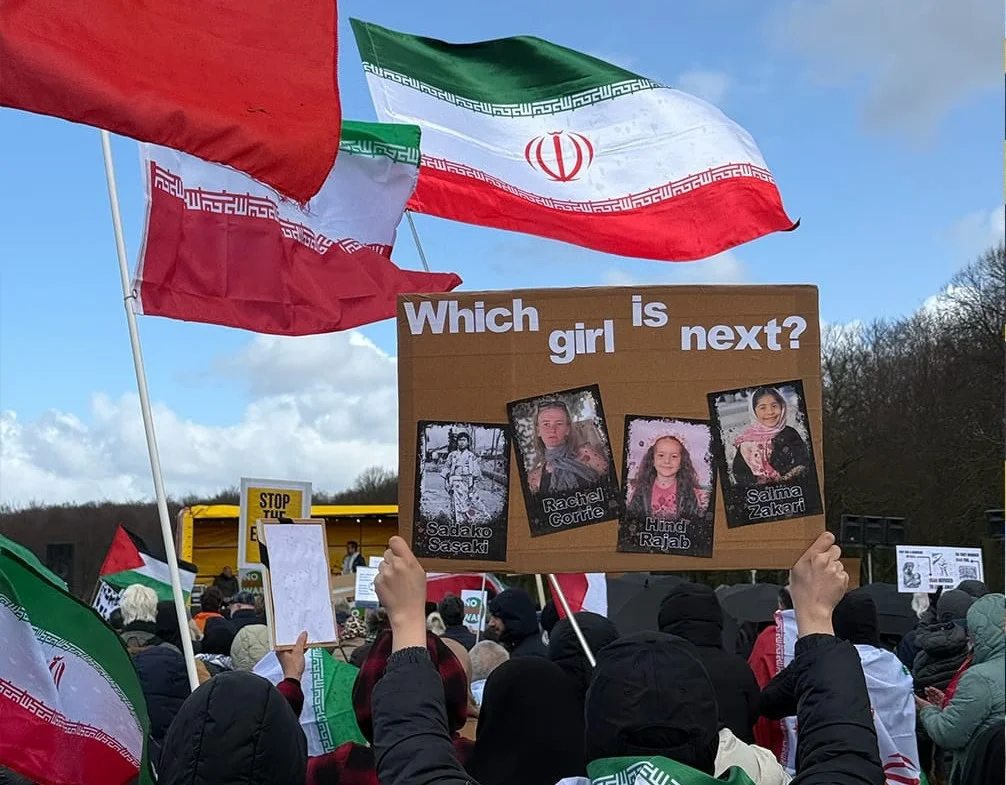
The Hague's anti-war protest dwarfed the MEK and Pahlavi rallies — and no one covered it
If this matters, share it. The algorithm buries what it can't monetize.
Share on X
One post can reach thousands. Make it count.
Follow for updates